


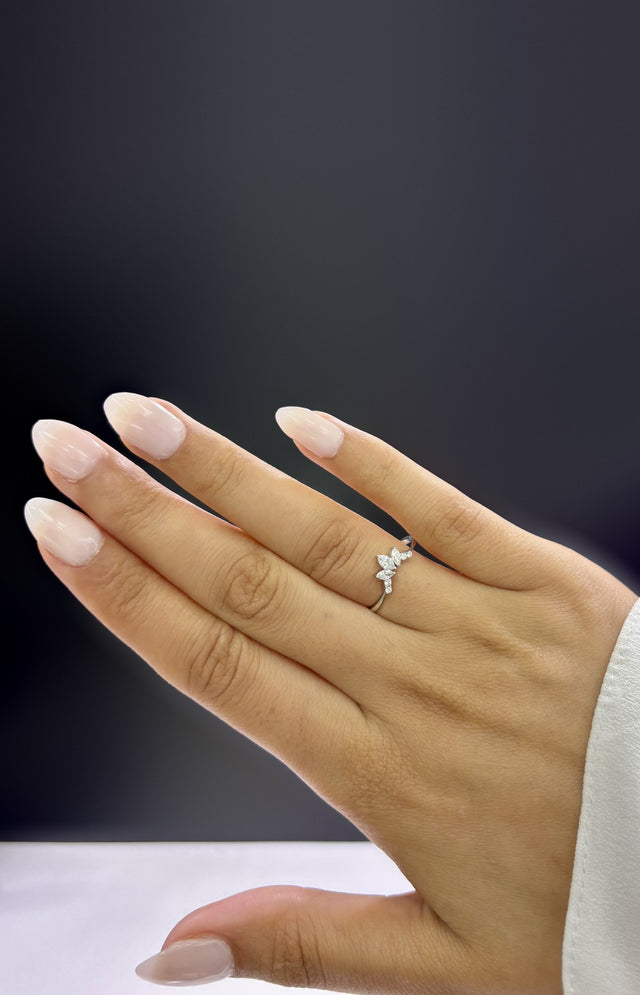

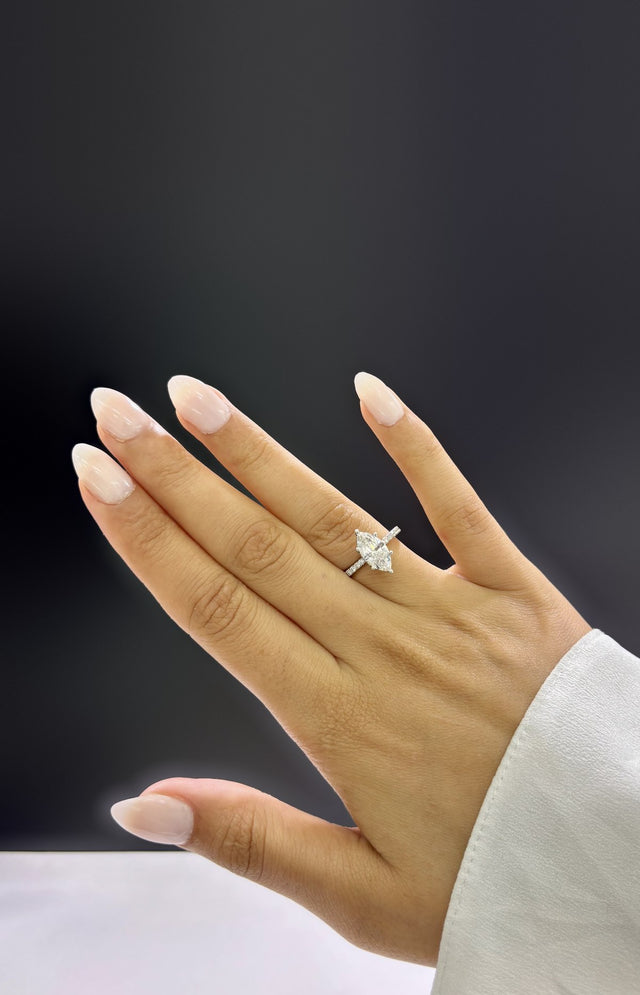


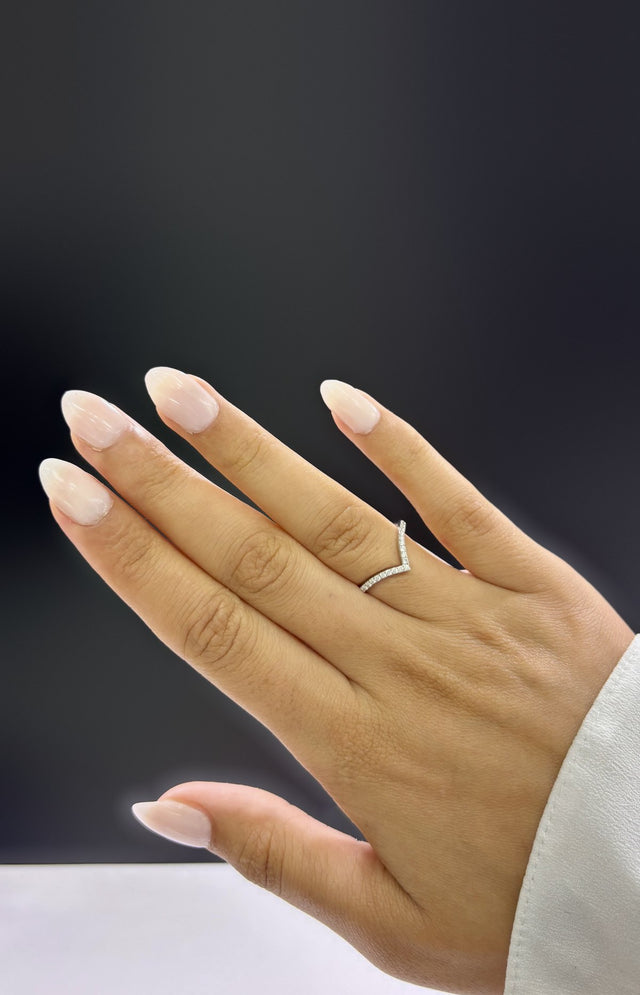


Not only under the spotlights of a shop window, which flatter every stone. Move close to a window, then look at the diamond in the shade, under ordinary lighting: a well-cut stone stays lively everywhere. Move your hand, since scintillation only shows in motion.
Between Stone And Light
Entre la pierre et la lumière : des bagues pensées pour laisser le diamant capter chaque reflet, du solitaire épuré à la monture pavée. Ouvrez une fiche pour voir la pierre, le métal et le prix, ou demandez conseil à notre équipe sur WhatsApp.
Trouvez votre bague en diamant idéale
Choisissez l’origine, le budget, le carat et la forme : la sélection se met à jour sous vos yeux. Chaque bague garde sa fiche, avec les informations de sa pierre.

-

Natural diamond · 0.7 ct
Bague halo coussin double anneau diamants naturels 0,7 ct - Or blanc 18K
15,400.00 Dhs -

Natural diamond · 0.6 ct
Bague halo coussin double anneau diamants naturels 0,6 ct - Or blanc 18K
14,400.00 Dhs -

Natural diamond · 0.7 ct
Demi-alliance cinq pierres diamants naturels 0,7 ct - Or blanc 18K
13,400.00 Dhs -

Laboratory diamond
Bague solitaire diamant de laboratoire - Princesse 1 ct, anneau pavé
17,000.00 Dhs -

Laboratory diamond · 1 ct
Bague poire anneau croisé pavé diamant de laboratoire 1 ct - Or blanc 18K
14,700.00 Dhs -
Laboratory diamond · 0.6 ct
Bague couronne trois marquises diamants de laboratoire 0,6 ct - Or blanc 18K
8,900.00 Dhs -
Laboratory diamond · 1.5 ct
Solitaire marquise pavé diamant de laboratoire 1,5 ct - Or blanc 18K
20,900.00 Dhs -

Laboratory diamond · 1.2 ct
Solitaire poire pavé diamant de laboratoire 1,2 ct - Or blanc 18K
16,900.00 Dhs -
Laboratory diamond · 0.3 ct
Alliance chevron pavée diamants de laboratoire 0,3 ct - Or blanc 18K
5,900.00 Dhs -

Laboratory diamond · 0.7 ct
Bague marquise ornée diamant de laboratoire 0,7 ct - Or jaune 18K
12,100.00 Dhs -

Laboratory diamond · 1.8 ct
Solitaire ovale anneau serti diamant de laboratoire 1,8 ct - Or blanc 18K
25,400.00 Dhs -

Laboratory diamond · 1 ct
Solitaire marquise diamant de laboratoire 1 ct - Or blanc 18K
12,900.00 Dhs
Between stone and light: how to look at a diamond's sparkle
A diamond does not produce light. It takes it in from above, sends it from one facet to another and returns it to the eye. The name of this collection, “Between stone and light”, is about that journey.
What we call sparkle covers distinct effects. Brilliance is the white light that comes back to you. Fire is the coloured flashes that appear when the stone splits the light. Scintillation comes from movement: bright and dark points that switch on and off as the hand moves.
All of this depends on cut quality far more than on weight, as our article on the 4Cs of a diamond explains. Too shallow or too deep, a diamond lets the light escape through the bottom. Shape plays a part too: a round brilliant multiplies small flashes, an emerald cut gives broad, calm reflections. The journal compares diamond shapes one by one.
Frequently asked questions
Almost always because it is greasy. Cream and soap leave a film under the stone that stops the light. A bath of lukewarm water with a few drops of washing-up liquid and a soft brush bring back its sparkle; the method is in our article on caring for diamond jewellery.
Yes. It is the same carbon crystal, which handles light in the same way. At equal cut quality, the eye sees no difference in sparkle between the two.


