


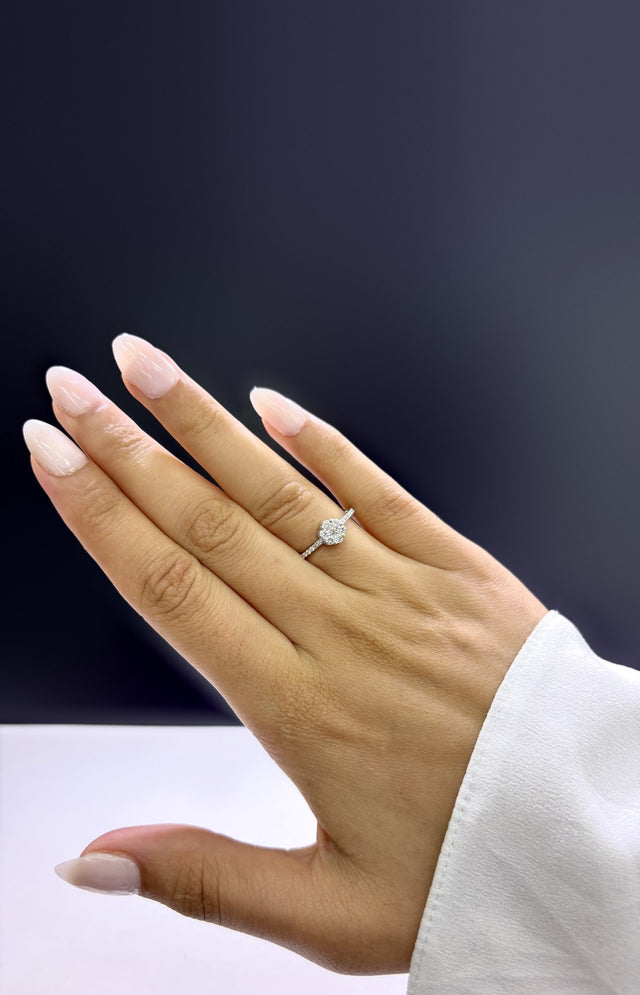


No. The price gap comes from production: machines can be multiplied, deposits cannot. With equal grades, the two stones behave the same way on the finger. Ask an Oroma adviser for the current gap for the weight you are interested in.
Engagement ring from Dakhla: natural or laboratory-grown, choosing without seeing
From Dakhla, you can decide between natural and laboratory-grown diamond without seeing the stones side by side, by relying on what is written down: the laboratory report, its number, the invoice. Oroma Diamond sells both, gives advice on WhatsApp, and you can ask to see a piece at its showroom in Casablanca.
What differs between the two
A laboratory-grown diamond is a diamond. Same carbon, same hardness, same sparkle; neither the eye nor the loupe can tell them apart. The difference lies in the origin. The natural one formed in the Earth a very long time ago and its quantity is limited. The other grew in a few weeks in a machine, and for equal characteristics it costs much less. Neither is better than the other: it all depends on what matters to the two of you, rarity or the size of stone for a given budget.
Resale, the HPHT and CVD processes, the difference from moissanite: all of that is in natural diamond or laboratory-grown diamond. Our page on laboratory-grown diamonds in Morocco also covers how to buy one with peace of mind.
Deciding without the stones in front of you
Placing two diamonds next to each other would tell you almost nothing about their origin. Only a gemmological laboratory determines it, and its report puts it in writing. So that is the document to ask for, whether you are in Dakhla or in front of a display case.
What the report must say
- the origin spelled out: natural, or “laboratory-grown”;
- the weight to the hundredth of a carat;
- the colour and clarity, or for a recent GIA report on a laboratory-grown stone, the words “Premium” or “Standard”;
- the name of the laboratory and a number unique to the stone.
That last point sometimes comes as a surprise: since 1 October 2025, the GIA no longer gives colourless laboratory-grown diamonds colour and clarity grades. Two reports may therefore not read the same way, without either one being suspect.
What you can ask for on WhatsApp
For each stone under consideration, ask for the report number, a photo of the whole document, then a video or photos of the ring in daylight. Check the number yourself on the laboratory's official website. If the adviser offers you a natural version and a laboratory-grown version, ask for both reports: with similar grades, you will see in black and white what the origin changes to the price. The other checks are in buying a diamond with confidence in Morocco.
Combining it with a trip to Casablanca
Dakhla is about 1,600 km from Casablanca by road, close to 18 hours of driving according to route planners. Royal Air Maroc links the two cities with a direct flight of a little over two hours. These figures are approximate: check the schedules with the airline.
Going to Casablanca for family, for work or for a connection? Give the adviser your dates. You can ask to see, at the Sidi Maarouf showroom, one ring with a natural diamond and another with a laboratory-grown diamond, and decide with both in your hand. The private appointment page is there to prepare that visit.
The rest of the order
The origin is only one decision among others. The adviser will also need your budget, the style she likes (a photo of a ring spotted among the engagement rings is often enough) and her finger size. For the size, a ring she wears on her ring finger, measured on the quiet and read off the size guide, will do; the method is in measuring your ring size. As for shipping to Dakhla, the adviser tells you on WhatsApp whether it is possible and how. Have it spelled out before you pay.
Elsewhere in Morocco
Engagement rings

Natural diamond · 0.7 ct
Bague double halo baguette pavé diamants naturels 0,7 ct - Or blanc 18K
16,400.00 Dhs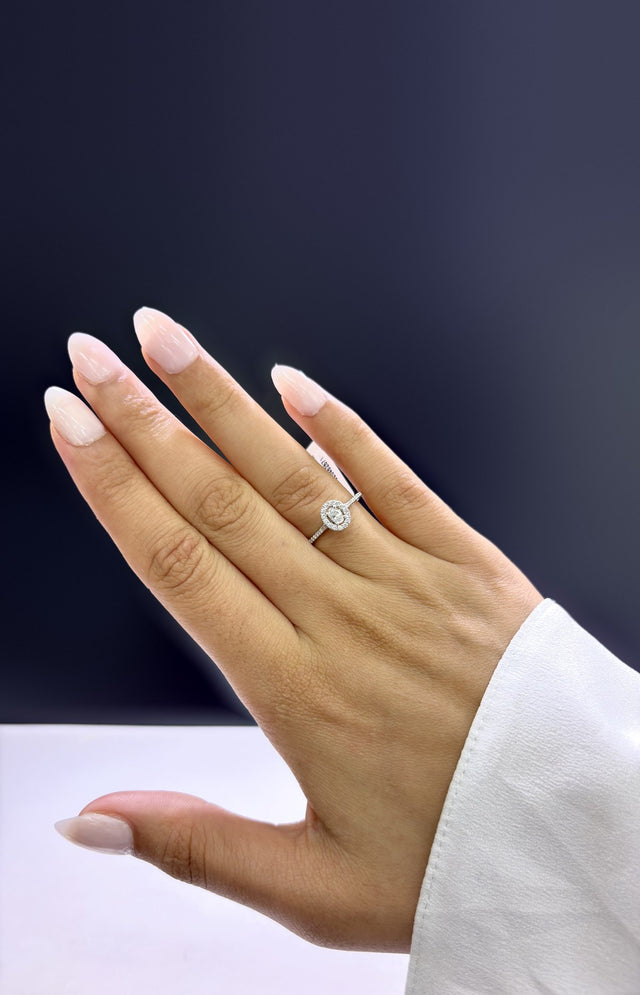
Natural diamond · 0.35 ct
Bague halo rond pavé diamants naturels 0,35 ct - Or blanc 18K
9,900.00 Dhs
Natural diamond · 0.9 ct
Bague double halo baguette double anneau diamants naturels 0,9 ct - Or blanc 18K
19,900.00 Dhs
Natural diamond · 0.8 ct
Bague soleil baguette diamants naturels 0,8 ct - Or blanc 18K
17,400.00 Dhs
Natural diamond · 0.4 ct
Bague baguette et pavé diamants naturels 0,4 ct - Or blanc 18K
10,400.00 DhsFrequently asked questions
For the look of the ring, its height and how it sits on the finger, a video filmed in daylight helps a great deal. For the quality and origin of the stone, no: only the report, checked online by you, tells you that.
Generally not: the small stones of a halo or a pavé are not graded one by one. The report covers the centre stone. For the rest, ask for the invoice to state the total weight of the small stones and their origin.
No. Moissanite is silicon carbide, a different material that imitates diamond. It also comes out of a laboratory, hence the confusion. Check that the word “diamond” appears on the report and on the invoice.